EXCHANGE OF VIEWS
How can we save the climate?

A week of climate education for everyone! This was the idea at the heart of the »Public Climate School« initiative in November 2019, when »Students for Future« organized lectures, workshops, and debates on climate change for the general public throughout Germany. The students wanted to show that climate-friendly action requires commitment and expertise from various disciplines. The climate strike week was widely supported by all faculties at the Friedrich Schiller University Jena. We asked around what the speakers at Jena’s »Public Climate School« had to say.
Prof. Dr. Andrea Marlen Esser
The philosopher held a public lecture titled »...and the devil may care?
What do climate ethics demand?«
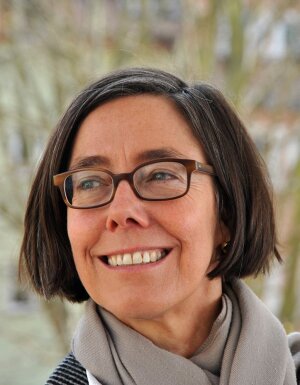
Prof. Dr. Andrea Marlen Esser, Universitätsprofessorin für Praktische Philosophie am Institut für Philosophie an der Friedrich-Schiller-Universität Jena
Image: Anne Günther (University of Jena)»If we want to stop harming the climate, we might have to give up some of our habits. But are we morally obliged to curb our consumption? When it comes to the human right of self-preservation, climate ethics demand a contribution from all people, but particularly from states. In accordance with the principle of distributive justice, this contribution depends on each state’s power and responsibility for
global warming.«
Sven Morgen
The political scientist held a seminar on the concept of crisis in the context of climate change and (foreign) policy.

Sven Morgen
Image: PrivatProf. Dr. Friedemann Schmoll
The cultural scientist held a discussion on our food and where it comes from.
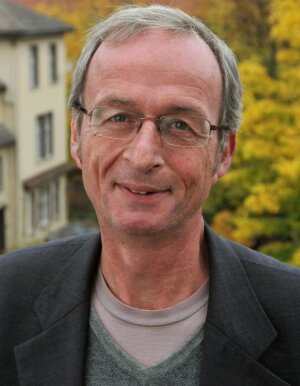
Prof. Dr. Friedemann Schmoll
Image: Anne Günther (University of Jena)Prof. Dr. Gerhard G. Paulus
In his lecture, the physicist presented models that can be used to calculate the earth’s temperature.
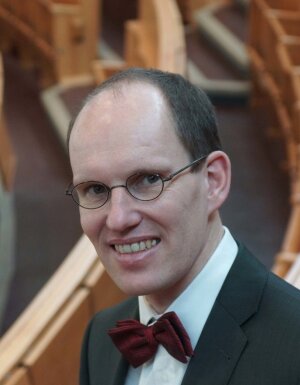
Prof. Dr. Gerhard G. Paulus
Image: Jan-Peter Kasper (University of Jena)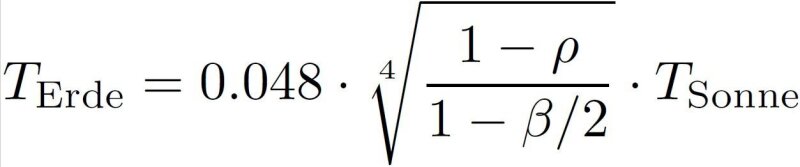
Formula to calculate the earth’s temperature
Image: Gerhard G. Paulus| TEarth is the earth’s temperature, i.e. the sought value, measured in Kelvin (°C plus 273). TSun is the sun’s temperature (5,800 Kelvin). ρ is the albedo, i.e. the proportion of sunlight that hits the earth and is not absorbed, but reflected (= 0.3). β is the proportion of heat that is radiated by the earth’s surface and absorbed by the atmosphere. β is currently 0.78. For these values, we obtain an average temperature of TEarth = 288 Kelvin (15°C). However, β increases in line with the concentration of greenhouse gases: When β is 0.79, the temperature is 0.5 °C higher. |
Prof. Dr. Christine Römermann
The ecologist and her team are investigating the effects of climate change on plant biodiversity.
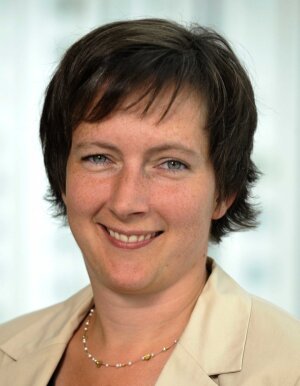
Prof. Dr. Christine Römermann
Image: Stefan KrutschRobert Pauli
The climate activist from »Fridays for Future« held a workshop to present and refute some of the common arguments used by climate crisis deniers.
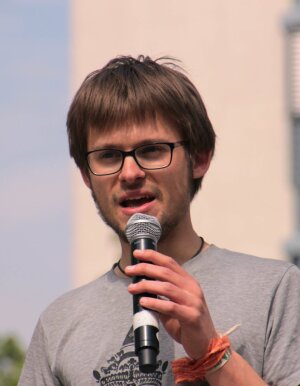
Robert Pauli
Image: PrivatProf. Dr. Andreas Freytag (r.) und Prof. Dr. Hartmut Rosa
The economist and sociologist held a debate on how to adequately tackle the global dimensions of the climate crisis.
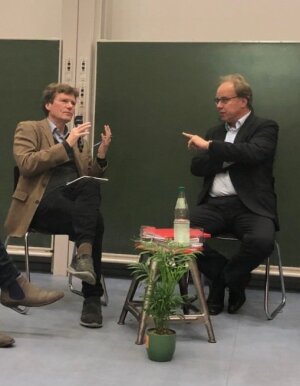
Prof. Dr. Hartmut Rosa (l.) und Prof. Dr. Andreas Freytag beim Streitgespräch.
Image: Till BayerSurvey: Till Bayer